Wednesday, August 3, 2011

"Where The Heck Is Mt Albert"


Mount Albert is a volcanic peak and is a suburb area in the city of Auckland, New Zealand. Its postcode is 1025. This suburb is southwest just near the city centre, and is surrounded by 5 other suburbs of Owairaka, Sandringham, Morningside,Point Chevalier and Waterview. Unitec New Zealand (an institute of technology) is near the northern end of the suburb.
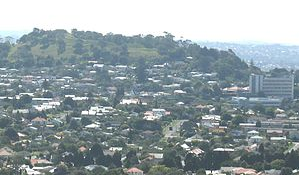
The peak, in parkland at the southern end of the suburb, is 135 metres in height, and is one of the many extinct cones which dot the city of Auckland, all of which are part of the Auckland Volcanic Field. It is one of Auckland's older cones, having been created some 50,000-60,000 years ago. It was the site of a pā, and was known as Owairaka. Extensive quarrying has reduced the height of the scoria cone by about 15 m and significantly altered its shape, but a few remnants of Maori earthworks like terracing, are still visible.
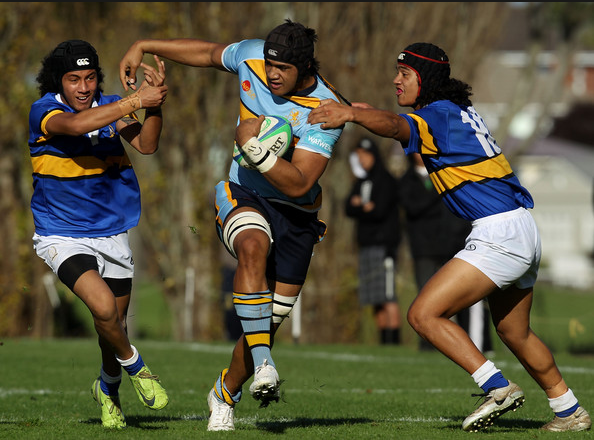
Mount Albert Grammar School "(M.A.G.S)" is a co-educational secondary school in Central Auckland. It teaches from year 9 to year 13. Mount Albert Grammar is one of the largest secondary schools in the country. It is also one of the most multi-cultural schools in New Zealand having over 60 different ethnic groups.

The 1st XV Rugby team has played since 1922 when it joined the Auckland Secondary Schools Rugby competition, winning the Championship in 1924 and 1925 . Since then it has won 19 times, the latest being 2010, winning back to back titles. It was also the New Zealand Champions in 1938, 1982 and 2010. In addition, the 1st XV has finished runners-up on numerous occasions, the most recent being runners-up to Gisborne Boys' High School in 2007.

Located near the Mount Albert shops on New North Road is Ferndale House. This wooden Gothic house was the home of the Garlick family who bequeathed it to the City. It is currently a community centre. The family firm Tonson Garlick manufactured furniture.

Bibliography:
http://en.wikipedia.org/wiki/Mount_Albert,_New_Zealand accessed 02/08/11

"Keep Your Eye On The Ball"


We are using the nations of the 2011 Rugby World Cup as our inquiry path.

For this unit we are in one of four teams:
Brumbies, Force, Rebels, Stormers.

My team is the Stormers!

There will be a number of tasks for us to navigate to achieve our goal of an excellent result in this unit. There are a mixture of individual and team tasks to be completed. The main task that will show our learning in this unit will be a Hyperstudio presentation about one of the countries in the World Cup competition.

My prediction on who's going to win the world cup is , The All Blacks. I think they have all that there is needed in rugby which is speed, power, aggressiveness and smart.

Tuesday, August 2, 2011

TEAMWORK


The word team stands for Together, Everyone, Achieves, More. When you manipulate the word work with team it transforms into teamwork.

Teamwork is when you do something collaboratively as 1 unit.

Friday, July 15, 2011


For the last few weeks Room 19 have been working on some designs and prototypes. First up we tried to identify some needs out in the street. Like for an example, what type of models that could try to influence students from walking around and eating to sitting down while they are eating.

Next we did some research on some modern designed models that captures other peoples eyes and stands out. I carefully chose a design that would observe other students.

My design I chose to create a prototype was a modern day couch. I used only three materials to create this prototype which was Cardboard, Tape and Newspaper. I painted the back pure white.

To be continued................

Tuesday, June 28, 2011

If I were an Astronaut.................


If I were an Astronaut
I will try to become the first NZ’r to ever set foot upon the moon,

If I were an Astronaut
I will have a great time floating around space,

If I were an Astronaut
I will fly on a spaceship around our Solar System,

If I were an Astronaut
I will be in space experiencing different types of Asteroids,

If I were an Astronaut
I will bring back rocks from the moon.

Wednesday, June 22, 2011

Steve Jobs and The apple computer!


Steve Jobs invented the Personal Apple Computer to the solution of people not having their own personal computer at their own living room . He was the Co-Founder & CEO of Apple Computer and also Co-Founder & CEO, Pixar.

Steve Jobs was born February 24, 1955, Steve Graduated from Homestead High School, Los Altos, Calif. in 1972
Going to work for Atari after leaving Reed College, Jobs renewed his friendship with Steve Wozniak. The two designed computer games for Atari and a telephone "blue box", getting much of their impetus from the Homebrew Computer Club. Jobs was not interested in creating electronics and was nowhere near as good an engineer as Wozniak. Although he was not really interested in creating electronics, his business sense for the marketability of these products was the turning point. He asked his engineering friend Wozniak to help him build a personal computer.

1974: Video game designer for Atari; worked there several months; used savings to travel to India; returned to California and spent a brief time on a communal farm.
1975: Attended meetings of the Homebrew Computer Club in Palo Alto, Calif., attended by friend and engineering genius, Stephen Wozniak; they joined forces and built a marketable table-top computer in Jobs' parents' garage; co-founded Apple Computer Inc.
1976: Introduced Apple I computer for $666; first single-board computer with on board Read Only Memory (ROM) that told the machine how to load programs from an external source and had a video interface.
1977: Introduced Apple II; first mass-marketed personal computer; had a plastic case and included color graphics; Jobs encouraged programmers to create applications for the Apple II; this resulted in 16,000 programs from games to farm budgets; former Intel marketing manager Mike Markkula became Apple chairman and secured venture capital of $600,000.
1979: Development of a computer named Lisa, which would redefine personal computing; Jobs removed as project manager; he began working on the Macintosh personal computer.
1980s
1980: Initial public offering of Apple; market value of company rose to $1.2 billion; Apple III introduced with eight applications, including text and graphics; initial problems forced a recall; once fixed, it became popular with professional customers; situation created a management shakeup; Markkula became president, Jobs became chairman.
1981: Stephen Wozniak took leave of absence after being injured in a private plane crash; IBM sold its first personal computer, four years after Apple II; Apple's sales continued to rise
1983: Public debut of Lisa, a powerful, more intuitive computer controlled by hand-held mouse; designed for computer illiterate; smaller, less expensive version called Macintosh also introduced; Jobs recruited former Pepsi Co President John Sculley as new Apple president and CEO.
1985: Jobs essentially ousted from Apple in a boardroom coup after a power struggle with Sculley; resigned with $150 million but personally hurt; formed NeXT Software to develop computer hardware and software; Microsoft sold its first Windows 1.0 operating system
1986: Bought Pixar computer animation studios from George Lucas for less than $10 million 1989: NeXT produced a powerful but expensive computer, which was rejected by the arketplace; Pixar won an Academy Award for computer-animated film "Tin Toy"
1990s
1993: Still unprofitable NeXT ended hardware division to focus on software for programmers and building Internet sites; Sculley resigned as CEO of Apple
1995: Walt Disney Pictures released Pixar's first feature film, "Toy Story," first animated feature created entirely on computer; was highest domestic grossing film that year
1996: Jobs contacted Apple; Apple acquired NeXT; Jobs returned as non-salaried adviser to chairman Gilbert F. Amelio
1997: Apple's revenues dropped significantly; Jobs negotiated deal with longtime competitor Bill Gates of Microsoft; Apple made deal to include Microsoft's Internet Explorer browser on Macintosh operating system; Microsoft agreed to invest $150 million of non-voting Apple stock and to develop Mac versions of popular Microsoft Office software; Amelio ousted by Apple board; Jobs offered CEO and chairman position, and he agreed to serve on an interim basis
1998: Apple Computer rebounded with three profitable quarters in a row.

Steve Jobs was kindly offered the National Technology Medal from President Reagan in 1985, before founding NeXT. he was then awarded the Jefferson Award for Public Service in 1987, and was finally awarded with the Entrepreneur of the Decade by Inc. magazine in 1989.


Steve Jobs has made apple computers a world-selling sensation. Apple computers allows to surf the net and use different kinds of software applications. Steve Jobs has made his Company bigger, better and faster!

http://www.theapplemuseum.com/index.php?id=49 (accessed 22/06/11)
http://en.wikipedia.org/wiki/Steve_Jobs (accessed 16/06/11)
http://www.appleinsider.com/articles/11/01/17/from_one_medical_leave_to_another_steve_jobs_steers_apples_most_successful_era_ever.html (accessed 17/06/11)

Wednesday, May 18, 2011

Innovative Cars


The past has changed and the future has arrived! Modern cars have changed over the past century, from an old, three-wheel car, into a flash four- wheel car.

The first petrol engine car to ever have been driven on land was driven by Karl Benz. (Karl Friedrich Benz, engine designer and car engineer.)

Henry Ford, the person who started the Ford Motor Company, had an idea of creating an assembly line. An assembly line is a way of creating new products, a safe and quick way of making products. Using this assembly line the Ford Motor Company has been successful by innovating in motor vehichles to be sold all around the world.